 Chengdu,
located in the southwest region of the People's Republic of
China, is the capital of Sichuan province and a sub-provincial
city. Benefiting from Dujiangyan Irrigation Project which was
constructed in 256 B.C., Sichuan Province is reputed as "Tian Fu
Zhi Guo", literally a place richly endowed with natural
resources. Chengdu, as the capital, is extremely productive. The
Min and Tuo Rivers, two branches of the Yangtze River, connected
to forty other rivers, supply an irrigation area of more than
700 square kilometres (270.27 square miles) with 150-180 million
kilowatts of water. Consisting of abundant mineral resources,
the land is extremely fertile. Chengdu,
located in the southwest region of the People's Republic of
China, is the capital of Sichuan province and a sub-provincial
city. Benefiting from Dujiangyan Irrigation Project which was
constructed in 256 B.C., Sichuan Province is reputed as "Tian Fu
Zhi Guo", literally a place richly endowed with natural
resources. Chengdu, as the capital, is extremely productive. The
Min and Tuo Rivers, two branches of the Yangtze River, connected
to forty other rivers, supply an irrigation area of more than
700 square kilometres (270.27 square miles) with 150-180 million
kilowatts of water. Consisting of abundant mineral resources,
the land is extremely fertile.
The history of Chengdu can be traced back 2,400 when the first
emperor built his capital here and named the city. Through
thousands of years its original name has been kept and its
position as the capital and as the significant center of
politics, commerce and military of the Sichuan area (once called
Shu) has remained unchanged. Since the Han (206B.C.-220) and
Tang (618-907) Dynasties when its handicraft industry
flourished, Chengdu has been famous for its brocades and
embroideries. Shu embroideries still enjoy a high reputation for
their bright colors and delicate designs, ranking among the four
main embroideries in China. Chengdu was the place where the
bronze culture, an indispensable part of ancient Chinese
culture, originated, the place where the Southern Silk Road
started, and the place where the earliest paper currency, Jiaozi
(not the dumpling!), was first printed. It is listed among the
first 24 state-approved historical and cultural cities and owns
23 state and provincial cultural relic units.
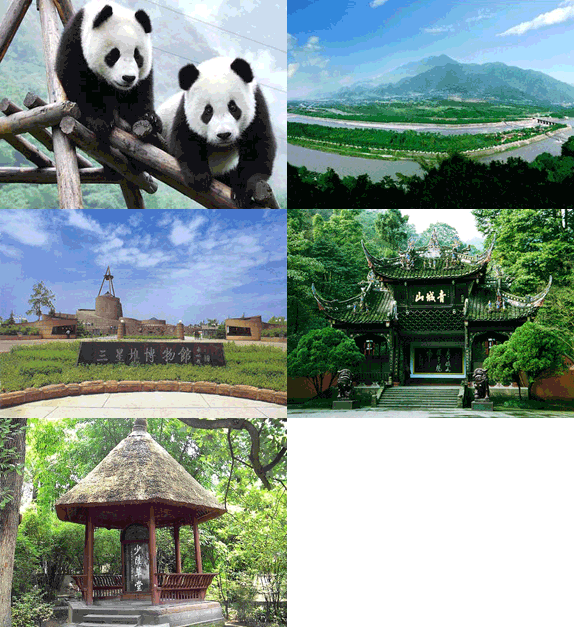
Huanglong ValleyIn addition to its profound historical and
cultural background featuring historic places of interest such
as the Thatched Cottage of Du Fu , Wuhou Memorial Temple and
Wenshu Monastery , etc, natural beauty abounds in surrounding
areas such as in the Jiuzhaigou Scenic Area and Huang Long
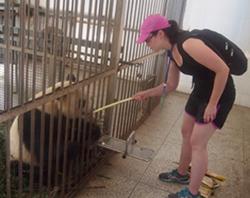
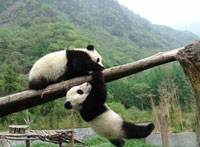
Valley (Yellow Dragon Valley) . The natural habitat of giant
pandas, Chengdu Panda Breeding and Research Center , supports
the world's only giant panda breeding and research base.
The native language in Chengdu is Sichuanese, otherwise referred
to as the Sichaun dialect. More precisely, the Chengdu dialect
is widely used in lieu of "Sichuanese" due to largely different
accents of Sichuanese speakers residing elsewhere. People from
Chengdu (or Sichuan in general) tend to eat spicy food. Local
specialties include Grandma Chen's Tofu (Mapo dofu), Chengu Hot
pot, and Dan Dan Mien (literally meaning "Noodles carried on a
pole") All three dishes are spicy. Mapo Dofu and Dan Dan Mien
contain Sichuan peppers to give them additional flavor.
An article by The Los Angeles Times (2006) called Chengdu
"China's party city" for its carefree lifestyle. Chengdu
outnumbers Shanghai in the number of tea houses and bars despite
having less than half the population. The inhabitants have a
reputation in China for having a laid-back attitude and for
knowing how to enjoy life.
Sampling the famous spicy Sichuan cuisine is a must on a trip to
Chengdu. Enjoying the food as well as the culture, shopping and
having tea at a teahouse afford a deeper understanding of
Chengdu.
Improved land and airlines extending nationwide provide greater
convenience. Chengdu is also the main inland access city to
Tibet.
Chengdu tourist attractions:
Chengdu Research Base of Giant Pandas
Chengdu-Wolong-National-Natural-Reserve
Chengdu
Wolong Panda Guide
Chengdu-Bifeng-Gorge-Base-of-China-Panda-Protection-and-Research (Bifengxia Giant Panda Base)
Chengdu-Sanxingdui-Museum
Chengdu-Huanglong
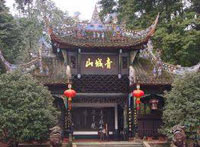
Chengdu-Mt.Qingcheng
Chengdu-Thatched-Cottage-of-Du-Fu
Chengdu-Wuhou-Memorial-Temple
Chengdu-Dujinagyan-Irrigation-Project-of-China
Chengdu-Mount Emei
Chengdu-Leshan Giant
Buddha
|