|
Nanjing (Nanking) City Tour Package
including Nanjing Hotel and Sightseeing
|
Tour Code & Duration |
Activities Involved |
|
|
GWA-NJ-01
4 days 3 nights |
Yangtze River Bridge, Dr. Sun Yat-sen's Mausoleum, the Xuanwu Lake,
Zhonghua Gate, the former President's House of China,
Confucius Temple, Mingxiao Tomb
 Click
to learn more about this
and signup. Click
to learn more about this
and signup.
|
GWA-NJ-02
4 days 3 nights |
Dr. Sun Yat-sen's Mausoleum,
Linggu Valley (Soul Valley), Ming City Wall, Yangtze River
Bridge, Nanjing Museum, Confucius Temple, Mingxiao Tomb,
Yuejiang Tower, Terrace City, Swallow Crag
Click
to learn more about this
and signup.
|
GWA-NJ-03
2 days 1 night |
Dr. Sun Yat-sen's Mausoleum,
Yangtze River Bridge, Xuanwu Lake, Confucius Temple
Click
to learn more about this
and signup.
|
EXSHNJ
7 days |
One-day Nanjing tour is also
available in Shanghai-Nanjing package. Experience the world's fastest high-speed bullet train at 350 km/h between
Shanghai and Nanjing
Click
to learn more about this
and signup.
|
|
| BT0094 |
Nanjing Airport Pick-up Service. $85/person |
| BT0093 |
Nanjing Airport Drop-off Service. $85/person |
| BT0092 |
Nanjing Train Station Pick-up Service. $69/person |
| BT0091 |
Nanjing Airport Drop-off Service. $69/person |
|
| Tour Code & Duration |
One-day Tour Attractions |
|
|
| BT0151(One-day) |
Nanjing, the capital of ten periods in Chinese history, is a city famed for its rich culture, long history and beautiful landscape. Dr. Sun-Yat Sen's Mausoleum, at the foot of the majestic Purple Moun. $123/person |
|
Lying on the south bank of the Yangtze River, Nanjing, the capital of Jiangsu Province, is one of the
most delightful of Chinese cities. Known as the Capital City of Six
or Ten Dynasties in China's history, it has a brilliant cultural
heritage. Yuecheng, the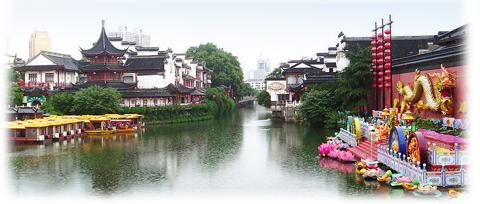 first recorded military defense constructed in early 472 B.C.,
opened the long history of Nanjing. In the following years, the city
reached its height of splendor at various times. In 229, Sun Quan,
one of the three heroes in China's Three Kingdoms Period (220 -
280), to strengthen his influence in the middle valley of the
Yangtze River, moved the capital of his kingdom to Jianye - present
Nanjing. From that time on, the city served as the capital for
several dynasties in China's history. In 1356, in a peasant
rebellion, Zhu Yuanzhang, later the Emperor Taizu of the Ming
Dynasty (1368 - 1644), conquered the city and renamed it Yingtian
Fu. In 1368, Zhu established the Ming Dynasty - the last feudal
dynasty ruled by the native Han people - and gave Yingtian Fu the
new name of Nanjing. Ten years later, the emperor made Nanjing the
capital of the country. The mausoleum of Emperor Zhu Yuanzhang is
perching on the southern slope of the Mount Zijinshan in the
northeastern part of the city. first recorded military defense constructed in early 472 B.C.,
opened the long history of Nanjing. In the following years, the city
reached its height of splendor at various times. In 229, Sun Quan,
one of the three heroes in China's Three Kingdoms Period (220 -
280), to strengthen his influence in the middle valley of the
Yangtze River, moved the capital of his kingdom to Jianye - present
Nanjing. From that time on, the city served as the capital for
several dynasties in China's history. In 1356, in a peasant
rebellion, Zhu Yuanzhang, later the Emperor Taizu of the Ming
Dynasty (1368 - 1644), conquered the city and renamed it Yingtian
Fu. In 1368, Zhu established the Ming Dynasty - the last feudal
dynasty ruled by the native Han people - and gave Yingtian Fu the
new name of Nanjing. Ten years later, the emperor made Nanjing the
capital of the country. The mausoleum of Emperor Zhu Yuanzhang is
perching on the southern slope of the Mount Zijinshan in the
northeastern part of the city.
Following officials' advice of "building walls and producing grain
to consolidate the rule", the emperor ordered the construction of
city walls. Today's majestic walls in Nanjing, the longest of its
kind in the world, are the result of that phase of construction.
Zhonghua Gate, simply meaning 'Chinese Gate', is a noted attraction
for tourists in the present city center.
In spite of its glorious times, the city also witnessed the hardest
moment of this nation. In 1839, the Opium War burst out after Lin
Zexu, an assiduous official, burnt twenty thousand boxes of opium in
Humen. On a battleship in Nanjing's Xiaguan, the corrupt Qing
government, under threat by Britain troops, signed the notorious
Nanjing Treaty, the first of the 'Unequal Treaties' which ceded Hong
Kong away from China for more than hundred years. Following this
treaty, invasions and colonial rule of the western countries
intensified and China sank into a harder and darker time.
Peasant groups of Taiping rebelled against the Qing government in
1853 and established the Taiping Heavenly Kingdom in Jinling,
Nanjing's name at that time, and formed an army. Unfortunately, the
peasant regime was short-lived and in 1864, troops of Qing
government won the city back. Nowadays, in Xuyuan Garden , one can
still see part of the palace of Heavenly King of Taiping Heavenly
Kingdom.
It was the Revolution of 1911, the Chinese bourgeois democratic
revolution led by Dr.Sun Yat-Sen that overthrew the Qing Dynasty. On
the first day of 1912, Dr. Sun Yet-sen gave his simple but sublime
address on the inauguration held of the new Republic of China.
Today, a memorial hall in the Mausoleum of Dr. Sun Yat-Sen, houses a
statue of Dr. Sun sculpted out of white marble.
There are two further negative memories of the city. On April 18th,
1927, Chiang Kaishek launched the counter-revolutionary 4.12 Coup
and established his power in Nanjing. Also, in 1937, the inhuman
Nanjing Massacre happened. In six weeks, more than 300,000 Chinese
people were killed including women and children.
No atrocity can go unpunished. After eight years of resistance, in
1945 the brave Chinese people eventually drove the barbarous
Japanese invaders out of China's homeland and the war criminals got
what they deserved. However Chinese people will never forget the
history. Pictures of the atrocities of Japanese soldiers taken by
Japanese army photographers are exhibited in the Memorial Hall to
the Victims in the Nanjing Massacre.
Finally, on April 23rd, 1949, Nanjing was liberated by the People's
Liberation Army and the Kuomintang's power in China was ended.
City of Culture:
Dr. Sun Yat-sen's MausoleumIn addition to historical sights,
memorials, museums and cultural sights also attract thousands of
travelers. The famous Confucius Temple (Fuzimiao) is not only a
memorial place for the Great Sage in China but has a surrounding
area bustling with shops, restaurants and a snack street housed in
traditional Chinese architectural buildings. In the city center,
Nanjing Museum is a must for travelers with a collection of more
than 420 thousand pieces, including about 2,000 that are rare and
valued. The observatory on Zijinshan Mountain to the east of the
city center was the first modern observatory built in China.
Qin Huai River, in the southwest of the city, extends one hundred
kilometers. The river used to be the most flourishing part of
Nanjing in the old days. In many Chinese novels, it is renowned as a
place which nurtured beauties and romance. Today, it is a place for
people to recall the old splendor of this historical city. Like all
sights in Nanjing, it tells the story of past, present and future of
the city.
Modern Metropolis:
Like most major cities in China, Nanjing is developing rapidly.
Great changes have taken place in the city. Modern highways and
railways connect the city with most major cities throughout the
country and it is becoming a sparkling metropolis akin to Shanghai
and Beijing with skyscrapers, luxury hotels, fashion shopping malls,
supermarkets and highly-developed economic zones throughout the
city. Transport in the city is very convenient with the new metro
service in addition to taxis, public buses, tourist special lines
and other means of transport. Modern amenities in luxury hotels make
your trip a comfortable one. Dazzling shopping malls and department
stores can be found in the commercial areas of the city with stocked
plenty of international brand names. Nanjing is also home to several
colleges and universities and a large foreign population. The city
is become an international metropolis with new faces every day.
Shanghai Side Trip to Nanjing
Many tourists to Shanghai may consider
have a side tour to Nanjing by taking an 1.5-hour-long express train.
Great Wall Adventure Club can form a package that combines Shanghai tour and Nanjing tour
together.
|
|
|
|